Local SEO
 Matthew BoyleLast updated: 23 October 2026
Tips and tricks around Local SEO and how to position your local business higher.
Who we are

Matthew Boyle
Matthew Boyle is a seasoned professional having helped multiple local businesses rank higher in their area and gain new leads and business. He has deep local SEO experience.
View Matthew Boyle's LinkedIn profileWhat a local SEO expert or agency costs
The cost of a Local SEO expert who provides consultancy and agency services can depend on the scope of the project and what exactly is needed. Below we have listed the prices we charge for the service. If you wish to have more information then contact us.
| What's included | One-off audit£500 | Monthly service£1,500per month |
|---|---|---|
| Google Business Profile audit | ✓ Included | ✓ Included |
| Local citation and NAP consistency check | ✓ Included | ✓ Included |
| Local keyword and competitor research | ✓ Included | ✓ Included |
| Location page review | ✓ Included | ✓ Included |
| Citation building and clean-up | ✗ Not included | ✓ Included |
| Location pages written and optimised | ✗ Not included | ✓ Included |
| Review generation strategy | ✗ Not included | ✓ Included |
| Monthly local rankings report | ✗ Not included | ✓ Included |
A practical guide to local SEO for your business
Display your prices: AI crawlers use them to make comparisons when users ask questions about your business
AI tools are now comparing local businesses on price, and some can even fetch prices for the customer. Showing any pricing at all improves your chances of being recommended. If you can't give exact prices, give a guide range or a "from" price. Put your prices on a dedicated pricing page, and repeat them on each service page too. If your website builder or developer can add price information in a format search engines read easily, even better. Hiding your prices means AI may simply recommend someone who doesn't.
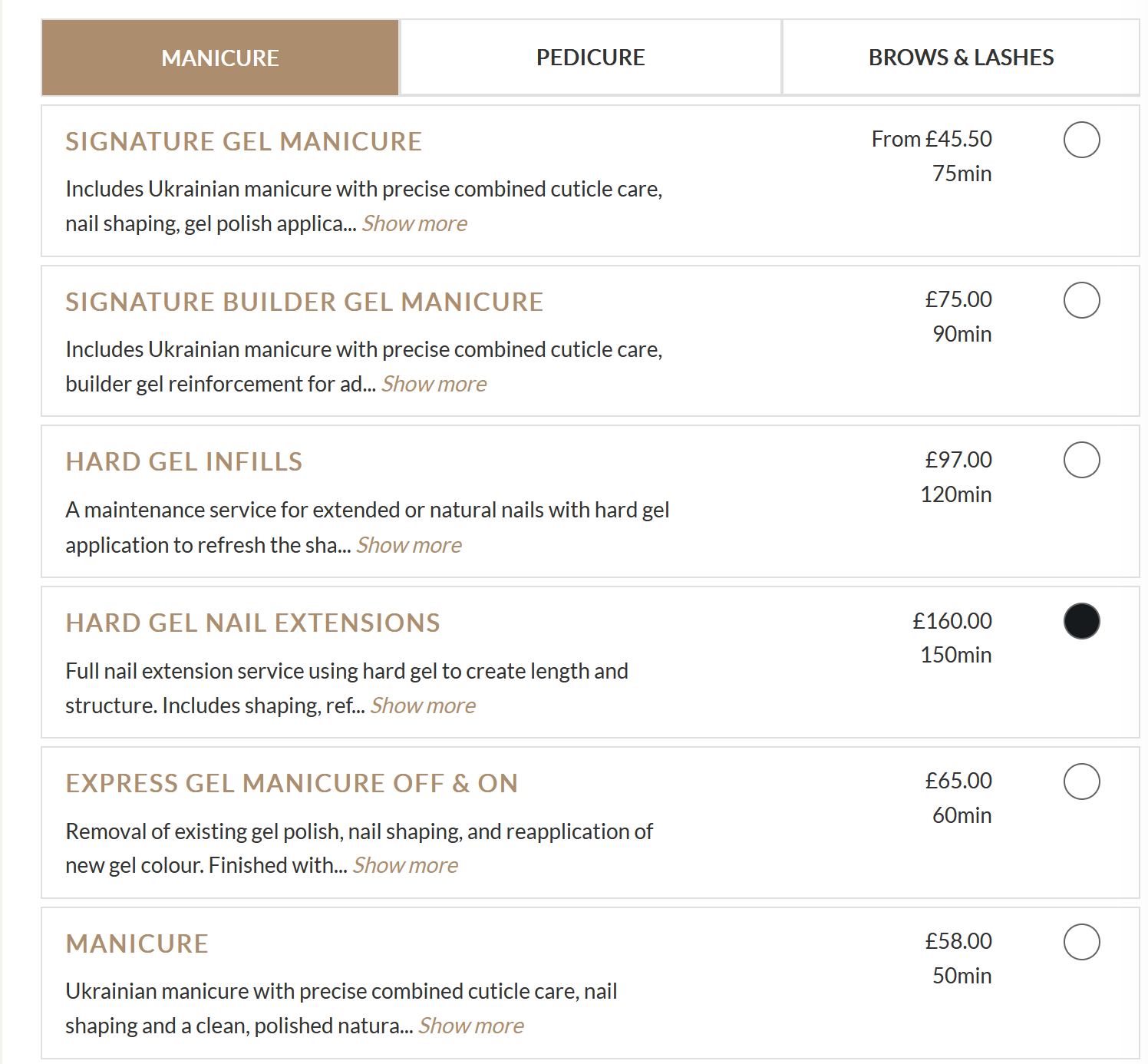
List prices on your website and other profiles. This can help crawlers make sense when being asked questions. They will choose you over your competitors when they reply with anything about pricing.
Specialise, then write one great page about it
Big chains cover everything. You can win by being the specialist. Searches are getting very specific, such as "boiler repair for older homes in Manchester", and AI answers for those searches are much easier to break into. Pick the speciality you're best at and write one long, detailed page about it, covering what you do, who it's for, prices and common questions. Don't create lots of thin, near-identical pages for every variation. One genuinely useful page beats ten weak ones, and won't risk a Google penalty.
Get the basics right first: Don't run before you can walk
It's tempting to chase the latest trick, but getting the basics right is most of the battle in local search. Make sure your main service and your town appear in your web page titles and main headings. Keep your Google Business Profile complete and up to date, with the right categories, opening hours, photos and services. Check that your business name, address and phone number match everywhere they appear online. You'd be surprised how many local businesses miss these simple steps. Fix them before you spend time on anything else.
Get into local "best of" lists
AI tools often recommend businesses that appear in local roundups, such as "Top 5 plumbers in Bristol" on local news sites, blogs and directories. Big chains rarely bother chasing these, which gives small businesses an opening. Search for "best [your service] in [your town]" and note which articles come up. Contact the writers, offer a reason to include you, such as a speciality or a local story, and make your reviews easy to check. Mentions on other trusted local websites matter more than ever.
Contribute in local Facebook groups and subreddits
AI tools are now pulling local recommendations from community Facebook groups and city or regional subreddits, such as r/london or r/manchester. When someone asks "who's a good electrician near me?", those threads can shape the answer for months. Join the groups where your customers hang out, answer questions helpfully and share genuine expertise. Don't spam links or post fake recommendations, because communities spot it fast and moderators will ban you. Being a trusted local voice is what gets you named.

People on platforms are asking local questions all the time. If they mention your service, you want to be involved in the conversation. If they want a plumber in London or a French restaurant in Manchester, or whatever business you are running, you want to be inovled.
Build your social media presence
Google and AI tools look at your social media profiles to understand what you do and check that you’re a real, active business. A business that appears consistently across several platforms looks more trustworthy than one that only has a website.
Set up profiles on the platforms your customers use, such as Facebook, Instagram, X or LinkedIn. Use the same business name, address, phone number and description on every one, and link them to your website.
Then keep them active. Post regularly, share your work and reply to messages. An abandoned profile can do more harm than good.
The above is not easy work and I appreciate it, but it should help in the long run.

Dishoom, a popular Indian restaurant posts regularly to it's Instagram account. You can gain new followers and customers and also it helps AIs and search engines understand that you are a legitmate business with a significant digital footprint.
Set up a WhatsApp Business profile where your customers can contact you
Almost everyone has WhatsApp on their phone, and many people, especially younger customers, would much rather send a quick message than pick up the phone. A free WhatsApp Business profile lets them contact you the way they prefer.
Add your opening hours, address, website and a short description, then tell people you’re on WhatsApp. Put it on your website, Google Business Profile, social media and shop window.
You can also send marketing messages when you have a sale or discount on. Just make sure customers have agreed to hear from you first.
Use a professional email address
An email address like joesplumbing123@gmail.com can make your business look less established, or even like spam. Customers, and the sites you list your business on, are more likely to trust an address that matches your website, like hello@joesplumbing.co.uk.
If you don’t already have a domain name, buy one. It usually costs just a few pounds a year. Then set up an email address on it, either through your domain provider or a service like Google Workspace or Microsoft 365. Use it everywhere: your Google Business Profile, website, invoices and social media.
List your business on Google, Apple and Bing Maps
This one is super important. Lots of people skip search engines and AI tools altogether and search straight in a map app to find a local business. If you’re not on the map, you don’t exist to them.
Set up a free profile on all three major map platforms: Google Business Profile for Google Maps, Bing Places for Business for Bing Maps, and Apple Business Connect for Apple Maps, which is the default on every iPhone. Bing Places can even import your details straight from your Google profile.
Do whatever it takes to get each profile verified. Unverified listings get less visibility and are easier for other people to change. Once you’re verified, keep every profile complete and active, with photos, opening hours, services and fresh reviews.
Apple Maps reviews are sourced from third-party sites so make sure you are active on them: Yelp, TripAdsior etc
Millions of iPhone users find local businesses through Apple Maps, not Google. Apple Maps shows ratings and reviews from other sites, such as Yelp and TripAdvisor, alongside its own ratings. So if you only focus on Google reviews, you could look weak to every iPhone user searching nearby. Search for your type of business on Apple Maps, open a few listings and see which review sites are shown. Then ask happy customers to review you on those sites too, alongside Google. Strong reviews in more places help you get chosen, whichever map your customers use.
Don't fake reviews; AI systems are becoming more advanced at detecting them and it will hurt you in the long run
AI tools like ChatGPT and Google’s AI Mode don’t just count your stars. They read your reviews to understand what customers really think of you. Fake reviews tend to look alike: short, vague, full of praise and posted in bursts. AI systems are getting better at spotting those patterns, and so are customers. A handful of detailed, genuine reviews that mention real experiences will do far more for you than fifty generic five-star ones. Ask real customers to say what they bought or what you did for them, in their own words.
Paid advertising
Information and tips around how to conquer paid advertising.
Answer every Local Services Ads call
If you run Google Local Services Ads, the pay-per-lead ads that appear at the very top of local searches, answer every call quickly. Google now charges you for a missed call if the caller stays on the line for a certain number of seconds. That means unanswered calls cost you money as well as customers. Make sure someone can always pick up during your advertised hours, or set up call forwarding to a mobile. If you can't answer calls at certain times, adjust your ad schedule so you're not paying for them.
Classified ads
Classified ads are often underlooked but can produce great results when applied properly.
Try classified ads
Classified ad sites aren’t glamorous, but depending on your business they can really work. Sites like Gumtree, Facebook Marketplace and Preloved get huge numbers of visitors every day, many of them local people ready to buy. A good listing can bring in direct sales and enquiries, and it gets your business name in front of people who might never have found you otherwise. They’re especially good for trades, services, furniture, cars, tuition, pets and second-hand goods. Most are free to start, so there’s very little to lose by testing them.
Track what your classified ads bring in and which platforms deliver
It’s easy to spend hours on classified ads without knowing if they work. Find a simple way to track them. Ask every new customer “how did you hear about us?”, or use a discount code that only appears in your classified listings. Keep a quick note of enquiries and sales from each site. After a couple of months, you’ll know which sites are worth your time and which you can drop. And if one is really smashing it? Heck, double down and pay for any upgrades and premium services the platform offers. Watch your costs of course.
Reply fast to any communications you get from a classified ad
Classified buyers are often messaging several sellers at once, and the first good reply usually wins. Turn on notifications for each site so you see enquiries straight away, and aim to reply within the hour. Save a few short template replies for common questions, like price, availability and area covered, so you can answer quickly from your phone. A fast, friendly reply also builds trust, which matters on sites where people are wary of scams.
Reviews
Reviews are some of the most important metrics in digital marketing for a small business. Good reviews will elevate you, bad reviews will crush your chances of being found.
Get reviewed beyond Google
AI tools don't know who's "best" in your area. They work it out from what other websites say about you, and many of the sites they quote are review and directory sites. So don't rely on Google reviews alone. Pick two or three other review sites that matter in your industry, such as Trustpilot, Yelp, Checkatrade or TripAdvisor, and ask customers to review you there too. Keep your details consistent on every one. The more trusted places that speak well of you, the more likely AI is to recommend you.
Don't let your reviews get deleted because of spam and review manipulation even if they had good intention.
Google is now using AI to scan reviews and delete ones that look like they break its rules. Businesses that have lost reviews tend to share three patterns: lots of reviews left from the business premises, lots of reviews mentioning staff names, and a burst of reviews in a short time followed by nothing. Avoid asking customers to leave a review on your shop's Wi-Fi or a tablet at the till, and don't run short review blitzes. Ask customers to review you later, from home, in their own words.
Turn reviews into website words
Your reviews, and your competitors' reviews, are full of the words customers actually use. Copy a batch into an AI tool like ChatGPT or Claude and ask it to list what customers praise most about you. Use that same language on your website. Then do the same with competitors' reviews and ask for their biggest complaints. If you do those things better, say so clearly on your site, in a positive way. For example, if competitors get complaints about turning up late, talk about your on-time promise.
Keep a steady stream of fresh reviews
The number of reviews you have still matters, but how recent they are now matters a lot more. A business with fewer reviews can outrank one with more if it keeps getting new ones regularly. So don't treat reviews as a one-off push. Build asking for reviews into your everyday routine, for example by sending a short message after every job or sale. A handful of new reviews every month is better than fifty in one week followed by silence. Steady and genuine wins.
Google business profile
Google is perhaps your biggest weapon when working with local SEO. Get it right and you will have a steady stream of success coming in.
Copy your competitors' services list
Here's a clever Google Business Profile trick. Start writing a review for a competitor on Google Maps, but don't post it. Scroll down to the section that asks "What services did you get?". This shows the services your competitor has listed, plus the ones Google suggests for your industry. Look for anything you offer that's missing from your own profile, then add those services to your Google Business Profile. It takes five minutes and helps Google show you for more of the searches you can genuinely help with.
Be ready for a profile suspension
Google still suspends Google Business Profiles often, sometimes for no obvious reason and sometimes because a pesky competitor asks them too. A suspension can wipe you off Google Maps overnight, so prepare before it happens. Keep proof of your business ready: a business licence or registration, a utility bill with your address, and photos of your signage and premises. Make sure your profile follows Google's guidelines, with your real business name and no extra keywords stuffed in. The good news is that Google has made the reinstatement process less frustrating, so you can usually get back quickly with the right evidence.
Frequently asked questions about local SEO
Do you charge for local SEO on a fixed-project, hourly or monthly retainer basis?
I don't charge by the hour. My local SEO services come in two fixed-price options: a one-off audit for £500, or a monthly retainer at £1,500 per month.
The audit is a fixed project with a clear end result, so you know the full cost up front. The retainer is a monthly fee for ongoing, hands-on work. If you're not sure which suits you, get in touch and I'll recommend one.
How much time and resources will you need from our team during the research phase?
Very little. Before I start, I'll send you a briefing form with questions about your business, the areas you serve, your Google Business Profile and your main local competitors. Once you've filled that in, I'll take care of the research and only come back to you if I need access to something or have a question.
How long will it take to see results from local SEO?
How long is a piece of string? It depends on the campaign, and it can take anywhere from a few days to several months. Some changes, such as fixing your Google Business Profile or inconsistent business details, can make a difference within days. Others, such as building citations, reviews and location pages that rank, take months.
Once I've reviewed your local search presence, I'll give you a realistic timeline for your situation.
What's the difference between the local SEO audit and the monthly retainer?
With the audit, I'll present you with an audit document full of recommendations, which you or your team can then put into action.
The audit covers:
- Google Business Profile audit
- Local citation and NAP consistency check
- Local keyword and competitor research
- Location page review
With the retainer, I'm hands-on. I'll help with the day-to-day management of your local SEO and we'll have regular check-ins to review progress.
On top of everything in the audit, the retainer includes:
- Citation building and clean-up
- Location pages written and optimised
- Review generation strategy
- Monthly local rankings report
Matthew Boyle
Digital Marketing Consultant · ~20 years experience
Matthew Boyle has over 20 years experience in digital marketing covering a wide range of topic areas. He is available for a one-off consultation or ongoing support.
View my LinkedIn profile